

STRATEGIC PLAN
Stronger Together. Leading for the Future.
2025-2030 Strategic Plan
Our Strategic Plan provides a framework to guide decisions and behaviors, provide common goals, and clear direction for everything that happens in USD 116.
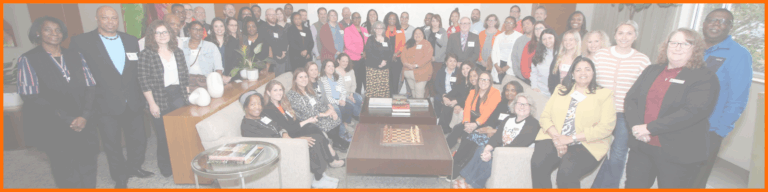
On April 16 and 17, 2025, USD 116 stakeholders collaborated to create a formal plan. This plan was grounded in the framework and goals of our Equity Action Plan, Discipline Improvement Plan, and other district-level data, which were used to make data-driven decisions that improve student outcomes and address the priority goal areas.
Also, including these components:
- A new Mission: Why our organization exists
- Values: The way we operate and make decisions, what we value
- Priorities: Defining how we will accomplish our mission and values
Misson
The mission of Urbana School District 116 is to create a supportive community to equip and nurture ALL learners to achieve success.
Values
Values: What Do We Value
Belonging | Community | Integrity | Pride
Priority Goal Areas
Definition: Broad areas of work that identify key priorities with clear, measurable goals
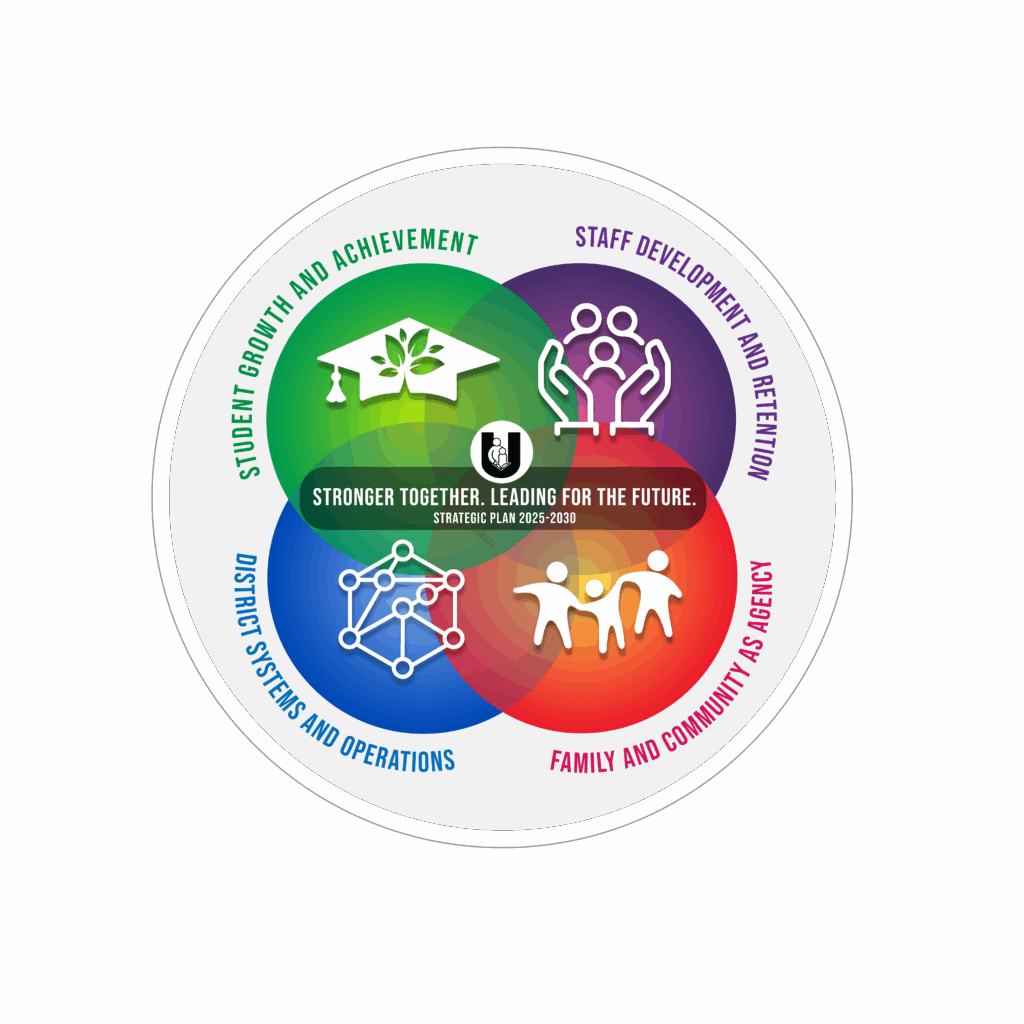
Priority Area One: Student Growth and Achievement (Belonging)
Priority Area Two: Staff Development and Retention (Pride)
Priority Area Three: Family and Community as Agency (Community)
Priority Area Four: District Systems and Operations (Integrity)
Priority Areas
Priority 1A Student Achievement: ALL students will grow and excel to reach their full potential, achieving success in college, career, life, and beyond.
Priority 1B Culture and Climate: Create supports for ALL students with a focus on positive behaviors to decrease exclusionary practices.
Priority 1C Student Services: Ensure the growth and development of students with Individualized Education Plans (IEPs).
Priority 1D Multilingual Learners: Ensure the growth and individual achievement of Multilingual Learners (MLL).
Priority 1E College and Career: Increase the number of students who graduate in four years.
Priority 2A Retention of Staff: Retain highly effective staff.
Priority 2B Recruitment of Staff: Recruit staff who represent and reflect our student body.
Priority 3A Supporting Family Engagement: Support and develop our families to engage in the learning for ALL students.
Priority 3B Communication with Families: Increase family engagement by improving communication tools and participation.
Priority 4A Improving Facilities: Adopt a Master Facilities Plan and improve facilities to meet the needs of ALL students.
Priority 4B Aligning Resources Equitably: Direct district resources based on ALL students’ needs.
Strategic Planning Process Overview
Through a partnership involving USD116 staff, students, family members, board members, and community members, this plan reflects our collective work, serving as the district’s guiding mission for 2025-2030.
The preliminary analysis phase allowed the district to hear from various stakeholders through discussions about root causes with district administrators and staff, as well as multiple opportunities to engage with district stakeholders regarding the upcoming plan. We were able to identify common priorities, positive strengths, and opportunities for growth to inform the current state of the district.
To create a focused, detailed, and actionable plan that aligns work across the district, the planning facilitators and members of the District Leadership Team reviewed data related to supporting outcomes for students, staff, families, the community, and district operations.
Through this process, they ensured the strategic planning process was anchored in the following objectives:
- Start with data – ground the work and focus on an objective, fact-based review of the district’s current strengths and opportunities for growth
- Engage stakeholders for meaningful impact – stakeholder input has been critical from start to finish and very meaningful to the process
- Create a new Mission Statement, Motto, and Values
- Identify the focused priority areas – this will help us align our efforts across the district
- Create S.M.A.R.T.I.E. Goals that align with the focused priority areas
- Create 5-year and 2025-2026 goals that are Strategic/Specific, Measurable, Ambitious yet Achievable, Realistic, Time Bound, Inclusive, and Equitable
The community engagement phase allowed the district to hear from various stakeholders through discussions about root causes with district administrators. There were also multiple opportunities to engage district stakeholders regarding the upcoming plan. The district was able to identify common priorities, positive strengths, and opportunities for growth, which informed the current state of the district.
Collecting feedback for the strategic plan was a collective effort that placed immense value on the input of all stakeholders. This inclusive approach ensures that our plan truly reflects the needs and aspirations of our community.
Surveys
One survey was administered and made available via district-wide communications, the website, and several family events. The survey remained open for approximately a month (Feb. 7-28) and received 299 responses from a wide variety of stakeholders.
Small Group Engagements
Attendance in small group-focused settings included participants from the following groups: Teachers, ESP Support Staff, Co-Teachers, Liaisons, Special Education Staff, Students, Parents/Guardians, Board Members, Community Partners, Religious Leaders, Principals, Central Office Staff and Administrators, and Community Members
Specialized Groups
- French Bilingual Parent Advisory Committee
- Spanish Bilingual Parent Advisory Committee
- Special Education Advisory Council – to be rescheduled
- Program Council Teacher leaders, Department Chairs, School Improvement leaders, Building Administrators
Community Meeting Listening Sessions
Five in-person community meetings were planned across all student attendance zones and board sub-districts.
- Dr. Williams and UECS – March 3
- Yankee Ridge Multilingual – March 7
- Leal – March 12
- Thomas Paine – March 13
- Ivanhoe Community – weather-rescheduled to May
- King – April 2
- Virtual option – March 27 during conferences
Portrait of a Graduate Design Team (January -April 2025)
The team included Teachers, District Liaisons, Special Education Staff, Students, Parents/Guardians, Board Members, Community Partners, Principals, central administrators, and Community Members.
Strategic Planning Design Team
Dates: April 16 and 17, 2025
This group will be invited to continue the work as future members of the Strategic Plan Steering Committee, which will meet at least twice a year to monitor the district’s progress on its priority area SMARTIE goals, objectives, strategies, and action steps.
On April 16 and 17, 2025, USD 116 stakeholders collaborated to create a formal plan.
This plan was grounded in the framework and goals of our Equity Action Plan, Discipline Improvement Plan, and other district level data, which were used to make data-driven decisions that improve student outcomes and address the priority goal areas.
During the 2025-2026 school year, the District will create a structure and sustainable model to support professional development in each of the strategic plan goals. Professional development opportunities will be embedded through all priority areas to support strategic planning goals. Staff development and training are too essential to exist in just one area, but will be spread across the entire district’s work.
Next Steps
- The Strategic Planning Design Team has been invited to continue the work they started as future members of the Strategic Plan Steering Committee.
- The Steering Committee will meet at least twice a year (i.e., in December and May) for the next five years to hold the district accountable for its goals and assist in monitoring the district’s progress on its four Priority Areas and S.M.A.R.T.I.E. goals, objectives, strategies, and action steps.
- Members of the Steering Committee have volunteered to help share the 2025-2030 Strategic Plan more broadly within our schools and in the community over the next few weeks before the end of the school year. This will also be another way to collect valuable feedback on the strategic plan from multiple stakeholders.
- All district and community stakeholders will be invited to join a working group next school year to turn the stated priorities into initiatives and develop strategies and specific action steps for progress monitoring. These working groups will bring the Strategic Plan and Portrait of a Graduate to life in our classrooms, schools, the district, and the community.
Thank you to all the staff, parents, students, and community members who participated or engaged in any way to help develop our Portrait of a Graduate and/or the 2025-2030 Strategic Plan.
Portrait of an Urbana High School Graduate

Urbana School District created its first Portrait of a Graduate as part of a collaborative effort to develop a comprehensive strategic plan at the end of the 2024-25 school year. The process was comprehensive, involving reviewing the district’s current state, researching workforce readiness, and in-depth discussions on the competencies young people need to develop before graduating.
The goal was to ensure that when our students graduate from Urbana School District they can fully realize their potential. Our Portrait outlines six essential competencies and skills (i.e., critical thinking, communication, adaptability, perseverance, self management, and social awareness) to equip our students for lifelong success.
Portrait of a Graduate Student Skills
Critical thinking is using your mind as a detective and an inventor. Critical Thinkers identify innovative and creative solutions to complex problems. They gather, analyze, and evaluate information and ideas to think deeply, apply multiple perspectives to develop innovative solutions, and make informed decisions.
Our Students…
- Understand a global view and propose solutions that are mindful of the impact on other parts of a system and the environment
- Evaluate one’s own thinking through analysis, assessment, and reflection
- Reflect upon and find multiple ways to respond to a problem
- Look at things from different angles, finding good information, and thinking deeply
Effective communication is like a recipe. Each type – verbal, nonverbal, or written – requires a different combination of ingredients, such as listening, speaking, and understanding. Effective communicators build skills in developing and sharing their voices. They listen, seek, and receive constructive feedback, read nonverbal cues, and collaborate with the intent to include and understand others’ viewpoints, opinions, and culture. They confidently engage in appropriate communication to resolve disagreements peacefully and productively.
Our Students…
- Articulate thoughts and ideas in various forms of communication, including oral, written, visual, and nonverbal, in their chosen language.
- Understand, negotiate, and balance diverse views and beliefs to reach workable solutions
- Demonstrate awareness, sensitivity, concern, and respect to connect with others
- Effectively communicate to inform, explain, motivate, and persuade a range of audiences
Adaptability combines various cognitive, emotional, and social skills. These skills enable our students to navigate challenges, embrace change, continue learning, and thrive in an evolving world.
Our Students…
- Demonstrate resilience and overcome challenges with a growth mindset and attitude
- Manage emotional thinking and embrace change as an opportunity for growth
- Master new skills in a rapidly evolving world
- Are flexible and organized in all environments
Perseverance is the ability to work towards goals with effort and determination, even when a task seems challenging. It involves self-discipline and grit, resisting the urge to give up by choosing to navigate obstacles to achieve passions and goals.
Our Students…
- Self-regulate and control cognition, motivation, and behavior to set and achieve goals
- Tackle difficult problems and discover solutions
- Embrace the fear of failure as a means of growth
- Build networks of support and understand when to advocate for oneself and others
Self-management is understanding and regulating one’s emotions, thoughts, and actions to foster personal growth, achieve goals, and navigate diverse environments effectively. This includes managing stress, staying motivated, and empathizing with others from various backgrounds to promote a positive and inclusive school community.
Our Students…
- Accurately assess one’s strengths and limitations
- Set personal and collective goals
- Accurately recognize emotions and their influence on behavior
- Understand how their actions and words impact others and the environment around them
Social awareness is understanding and empathizing with others, especially those from diverse backgrounds and cultures, to foster positive relationships and a respectful community. This includes demonstrating responsible behavior by recognizing emotions, understanding social and ethical norms, and being aware of the impact of one’s actions on others within the school and broader community.
- Our Students…Demonstrate empathy and compassion
- Appreciate and respect the differences of others and their perspectives
- Understand how to handle stressful situations
- Recognize and celebrate the strengths and contributions of others